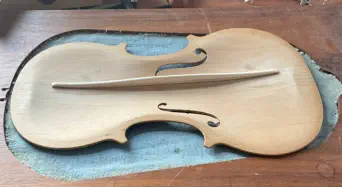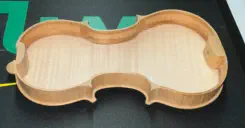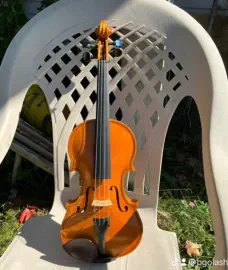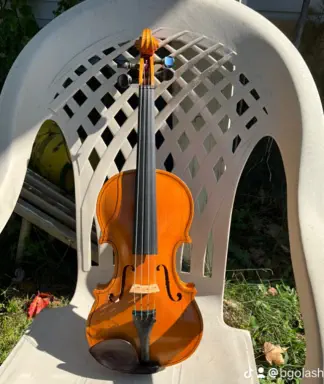
This project began in high school around 1975 when my shop instructor proposed that I build a violin. The curriculum favored machine-tool operation; violin work is roughly 95% hand carving with gouges, planes, scrapers, and knives. Much of my skill development happened at home. Without online resources and without owning a reference violin, I still completed the major components — top plate, back plate, ribs, neck, and scroll — to a standard I was satisfied with.
In Northampton, Massachusetts, master violinmaker Martin Cornelissen provided guidance on construction methodology and critical dimensions. After high school, cabinetmaking took priority and the parts went into long-term storage.
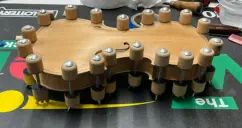
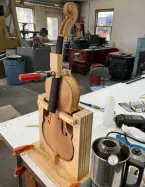
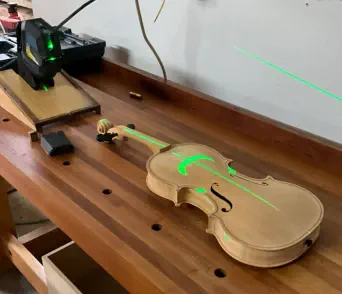
In 2023, after retiring from self-employment, I resumed assembly. Hot hide glue — limited open time, precise joints, and efficient clamping — differs sharply from cabinet practice. Setting the neck required strict control of alignment, projection, and overstand for correct fingerboard geometry and playability.
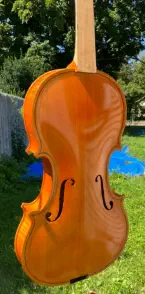
For finishing, I tested oil varnish on scrap first. Unthinned varnish would not level when brushed; a mix of two parts varnish to one part thinner flowed and leveled well with a brush-only application.
The instrument was evaluated and played by Andranik Gaybaryan, master violinmaker and performer, also in Northampton.